
What is rucking? Walking with weight, explained
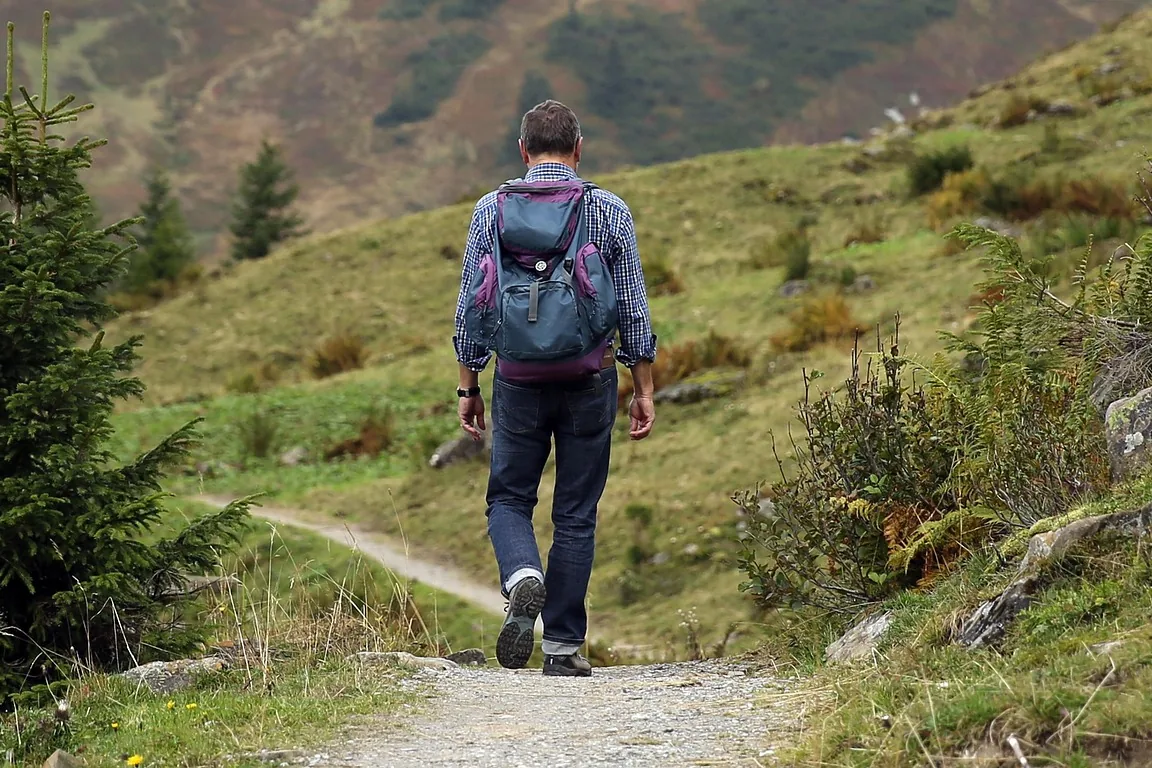
Rucking is walking with a weighted backpack, a rucksack, which is where the name comes from. Soldiers have done it for as long as there have been armies. As a civilian workout it is simply a walk made harder: same route, same pace, more weight on your back.
The short answer
Rucking turns an ordinary walk into harder work without making you run. By the standard equation researchers use for walking with a load, a 10 kg (22 lb) pack raises the energy cost of a flat walk by about a tenth for an 80 kg adult, and a 20 kg (44 lb) pack by about a fifth, with more for lighter people and on hills. Start light, keep the weight high and close to your back, and add weight slowly.
How much harder does a pack make walking?
Researchers have estimated the energy cost of walking with a load since the 1970s, mostly for soldiers. The best known model is the Pandolf equation, published by US Army researchers in 1977, which predicts energy use from body weight, load, speed, slope and terrain. Here is what it gives for a walk on flat pavement at 5 km/h (3.1 mph):
| Pack weight | 60 kg (132 lb) walker | 80 kg (176 lb) walker |
|---|---|---|
| No pack | 227 kcal an hour | 302 kcal an hour |
| 5 kg (11 lb) | 240 (+6%) | 315 (+4%) |
| 10 kg (22 lb) | 255 (+12%) | 330 (+9%) |
| 15 kg (33 lb) | 272 (+20%) | 345 (+14%) |
| 20 kg (44 lb) | 292 (+29%) | 363 (+20%) |
Two things stand out. The same pack is harder work for a lighter person, because it is a bigger share of their weight. And the load matters less than the ground: the same equation multiplies the cost for hills and rough or soft terrain, so a hilly ruck with a light pack can cost more than a flat one with a heavy pack. Treat the figures as model estimates, not as what your watch should show.
How to start rucking
- Start light. A 2026 review of weighted-vest use in older adults recommends conservative starting loads and gradual increases, and the same sense applies to a pack. A few kilos for your first walks is plenty.
- Add weight slowly, and change one thing at a time: weight, distance or speed, not all three in the same week.
- Keep the load high and tight. A review of military load carriage found that keeping the load’s centre of mass close to the body’s gives the lowest energy cost and keeps you upright, closest to walking without a load.
- Use the hip belt. The same review recommends hip belts whenever possible, because they take pressure off the shoulders.
- Pick light shoes. Weight on the feet costs far more than weight on the back: the review found each kilogram added to the feet raises energy use by 7 to 10%.
- Leave gaps between heavy sessions. Military conditioning advice for load carriage, in a 2021 international review, is one loaded session every 10 to 14 days alongside other training. Civilian rucks are lighter, but rest days still matter.
Heavy loads carried far and often are linked to injuries in soldiers, from joint and ligament problems to stress fractures. Most civilian rucking uses a small fraction of military loads, but if you have back, knee or heart problems, check with a doctor before adding weight to your walks.
Rucking vs running
Running covers more ground in an hour. Rucking keeps the pace of a walk and gets its extra effort from the load instead. For people who don’t enjoy running, or are building up to it, a pack is a way to make walking harder without speeding up. Neither is better in general: they are different ways to add effort.
Backpack or weighted vest?
Both add weight. A vest spreads it around the chest and back, close to the body, and leaves nothing hanging off the shoulders. A backpack is easier to adjust: add a book or a water bottle, take one out. The research on vests is mostly in older adults. A 2026 mini-review of 15 studies found benefits were more likely with progressively loaded, task-based programmes, such as exercises done in the vest, and that just wearing a light vest during the day generally did not show measurable improvements in muscles or bones.
Does rucking count as steps?
Yes. A ruck is a walk, and your phone or watch counts the steps the same way, so they go into Apple Health or Health Connect like any others. The extra weight doesn’t add steps, it makes each one harder.
A goal for every walk
The hard part of walking more is not the walking. It is having a reason to go out today. reTrek gives your walks a finish line: pick a famous route, like the Camino de Santiago or the Inca Trail, and every walk moves you further along it, with a short film about the place waiting at each milestone. You stop looking for a spare moment to walk and start walking to reach the next milestone.
Everest Base Camp is free. Get reTrek.